
This Course Enables You To:
- Set up Python, R and a dashboard tool, and connect them into one workflow
- Tell event data from tracking data, and know when to use each
- Collect data from public and proprietary sources, data feeds and web scraping
- Clean, convert and merge datasets with Pandas
- Interpret soccer statistics without falling into the common traps
- Turn key performance indicators into dashboards and match reports
- Cluster players into roles, then rank quality within each role
- Combine several data sources into one clear storyline
- Evaluate player monitoring technology for validity
- Design a simple data integration workflow with automation and governance
Course Details
Clubs, federations and performance departments now expect their staff to work with data, not just receive it.
This certificate takes you through the whole workflow an analyst uses day to day: where soccer data comes from, how to collect it, how to clean it, how to analyse it, and how to turn it into a dashboard or match report that a coach will actually use.
You learn it by doing it. You set up Python, R and a visual analytics tool in the first module, then work with real soccer formats - event data, tracking data and the file formats data providers supply - through to player-role clustering and athlete monitoring.
Nine modules from seven practitioners and researchers working in soccer analytics. Soccer is the case study throughout, and the methods carry over to any team sport.
Who this course is for
- Data scientists and analysts who want to specialise in soccer and team sport
- Performance analysts sharpening their key performance indicators, visualisation and match reporting
- Sport scientists and strength and conditioning practitioners connecting monitoring data to performance questions
- Coaches, scouts and recruitment staff who want to use data in their decisions
- Anyone early in their analytics journey who wants a structured way in
It is a foundation course: no previous analytics or coding experience is needed. The first module gets your tools installed and working.
From raw data to a report a coach will use
Plenty of courses teach the theory of analytics. This one follows the working order: sources, formats, collection through data feeds and web scraping, cleaning, analysis, visualisation, reporting.
Each step is taught on a soccer problem - match trends, recruitment, player roles, athlete monitoring - so what you build is something a performance department would recognise, not a classroom exercise.
Official Accreditation By ISSPF
This course is fully accredited by ISSPF & ensures the study hours will contribute to the achievement of a formal accreditation & ISSPF continued professional development.
UEFA Federations
Official Accreditation By Latvian Football Federation (UEFA)
The Latvian Football Federation (LFF) fully accredits ISSPF online courses. Completion of these courses contributes to formal LFF accreditation and professional development. ISSPF courses are also recognized for UEFA PRO to C course revalidation and Professional Diploma refreshment.
Official Accreditation By Slovenian FA (NSZ) (UEFA)
The Slovenian FA (NSZ) fully accredits ISSPF online courses. Completion of these courses contributes to formal NSZ accreditation and professional development. ISSPF courses are also recognized for UEFA PRO to C course revalidation and Professional Diploma refreshment.
Official Accreditation By Iceland FA (KSI) (UEFA)
The Iceland FA (KSI) fully accredits ISSPF online courses. Completion of these courses contributes to formal KSI accreditation and professional development. ISSPF courses are also recognized for UEFA PRO to C course revalidation and Professional Diploma refreshment.

Official Accreditation By Lithuanian Football Federation (UEFA)
The Lithuania FF (LFF) fully accredits ISSPF online courses. Completion of these courses contributes to formal LFF accreditation and professional development. ISSPF courses are also recognized for UEFA PRO to C course revalidation and Professional Diploma refreshment.
CONCACAF Federation
Accredited by British Virgin Islands Football Association (BVIFA), CONCACAF
This online course holds full accreditation from the BVIFA, guaranteeing that study hours count toward formal accreditation and BVIFA's professional development. Additionally, it's accepted for BVIFA-CONCACAF course revalidation.
Official Course Endorsement
Endorsed By Scottish Football Association (SFA)
This course has been endorsed by the SFA as part of the revalidation process.

Endorsed By Bournemouth University (BU)
This course is fully endorsed by the Bournemouth University, Bournemouth, England, UK.
Endorsed By East Tennessee State University (ETSU)
This course is fully endorsed by the ETSU, Tennessee, USA.

Endorsed By Universiti Teknologi MARA (UiTM)
This course is fully endorsed by the UiTM, Malaysia.

Endorsed By Wrexham University
This course is fully endorsed by the Wrexham University, Wrexham, Wales, UK.
Official Course Endorsement By Estonia Football Association (UEFA)
The Estonia FA (EJL) endorses ISSPF online courses. ISSPF courses can be used for UEFA PRO to C course revalidation and Professional Diploma refreshment for ISSPF partner or nominated federations. Please check with the relevant federation before undertaking.
Official Accreditation By Football Association of Finland (UEFA)
The FA of Finland (FAF) accredits ISSPF online courses as part of their UEFA coaching program & course revalidation. Completion of these courses contributes to formal accreditation refreshment and professional development.
Course Modules
Nine modules, in the order an analyst works: set-up, sources and collection, statistics, visualisation, cleaning, then player roles, a case study and monitoring technology.
01Getting Set Up for Data Science in Soccer
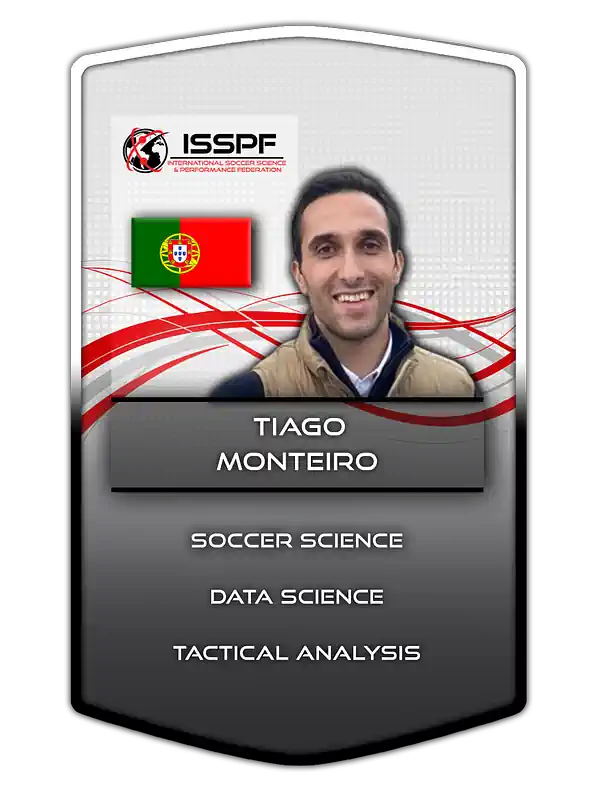 Delivered by Tiago Monteiro
Where the hands-on work starts. You install a beginner-friendly Python environment for soccer data, set up R for statistical analysis and reproducible reporting, and load your first dataset into a visual analytics tool to build a simple view of key performance indicators. By the end of the module the three tools are connected into one workflow, from raw dataset to a report you can share.
02Introduction to Soccer Analytics
Delivered by Dr. Javier Fernández Navarro
Why data has moved to the centre of decision-making in modern soccer, and what kinds of data there are to work with: event, tracking, physical and contextual. The module shows how analytics feeds performance analysis, recruitment and tactical preparation, and sets event data against tracking data so you know what each one captures and where each one runs out.
03Data Sources and Collection Techniques
Delivered by Ashmeet Anand
Every analysis starts with a choice of source. This module compares public and proprietary soccer data and how to pick the right one for the question in front of you, then works through the file formats that data usually arrives in. You learn to collect and refresh datasets automatically through the data feeds providers publish, and when web scraping is appropriate, along with the quality risks it brings.
04Fundamentals of Soccer Statistics
Delivered by Dr. Javier Fernández Navarro
How to read match and player numbers without being misled by them. The module covers the descriptive summaries used in match reporting (totals, rates, per-90-minute figures and averages) and, more importantly, what each metric actually says about the behaviour behind it. It closes on the common traps: samples too small to trust, context that skews a figure, and comparing players whose roles do not match.
05Data Visualisation for Soccer
Delivered by Dr. Pegah Rahimian
Why visualisation is essential to both analysing soccer and communicating it, and the tools analysts use for match reports, weekly reviews and scouting. You define key performance indicators across players, matches and possessions, then learn to structure a dashboard or match report around the trends and the few messages that matter.
06Introduction to Data Processing and Cleaning
Delivered by Ashmeet Anand
Most of an analyst’s time goes on getting data ready, and this module is where you learn to do it properly. Working in Pandas, the standard Python library for the job, you deal with missing values, duplicates, inconsistent labels and formatting, convert data types (and see how a wrong type quietly breaks an analysis), then merge and join separate datasets into one table ready for analysis.
07Identifying Different Player Roles Using Data Science
Delivered by Henrik Schjøth
Why style of play and role profiles matter for recruitment and squad planning, and how to find them in the data. You engineer features that describe what a player actually does, cluster players into meaningful role groups, then separate role from quality by ranking players within their role. The module finishes by testing whether those roles hold steady from one season to the next.
08Case Study into the Use of Data Science in Soccer Performance
Delivered by Aurel Nazmiu
The course’s methods brought together on a single soccer performance problem. The module frames the problem, maps an analysis to it, and combines several data sources into one coherent storyline, structuring the data so the visuals and comparisons stay accurate. The end point is the one that matters in a club: turning raw outputs into insight a coach can act on.
09Implementing New Technologies in Soccer
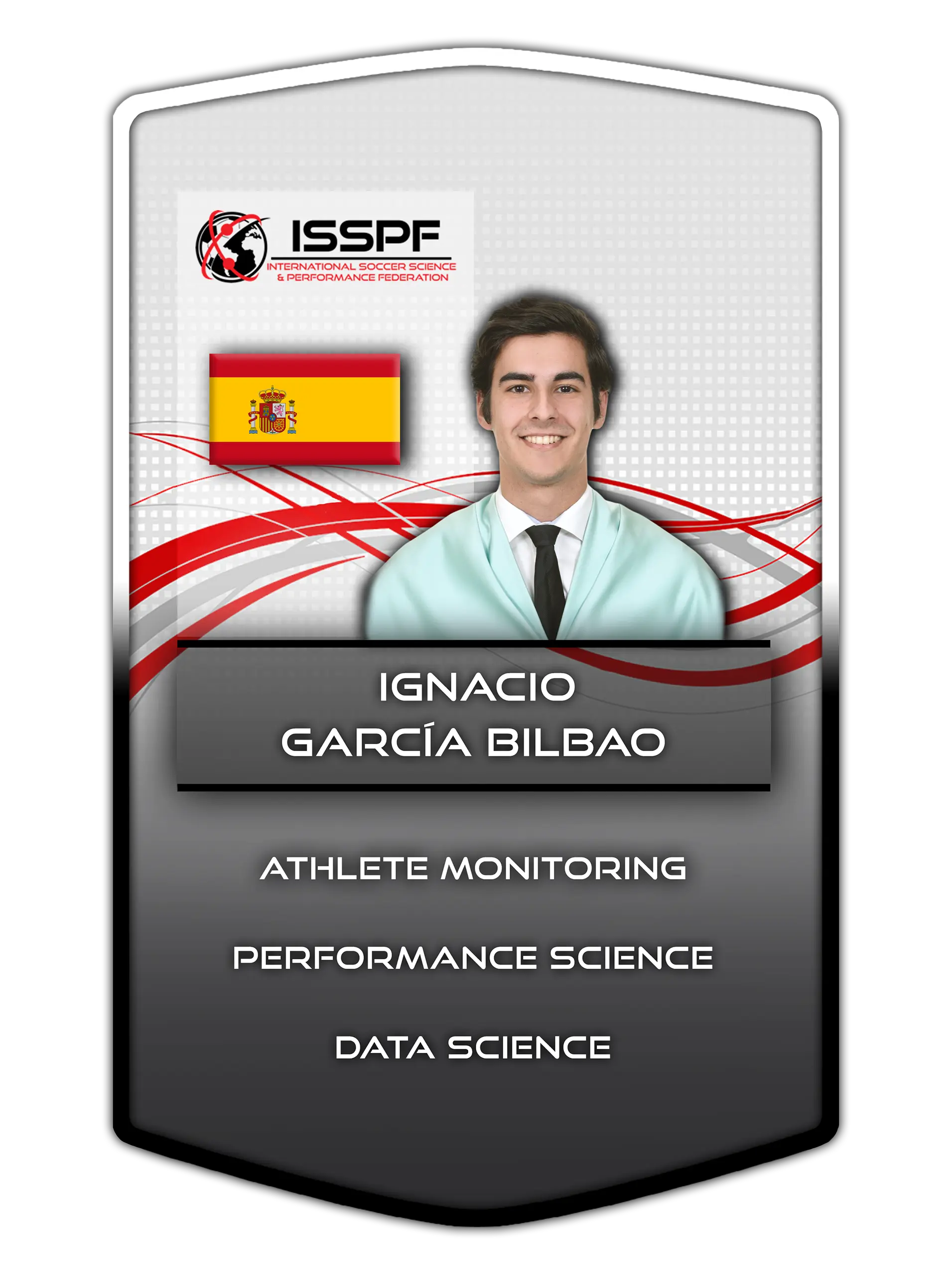 Delivered by Ignacio García Bilbao
What to measure when monitoring players, how to measure it, and how to judge the technology doing the measuring, including FIFA’s quality standards for electronic performance and tracking systems. The module explains how modern match and tracking technologies work and what they produce, then shows how to design a basic framework that brings that data together, with automation and clear rules for how it is governed.
What you get with your enrolment:
Frequently asked questions
Who is this course for?
Anyone who wants to understand and apply data science in soccer: analysts and data scientists moving into sport, performance analysts, sport scientists and strength and conditioning staff, and coaches, scouts and recruitment staff who want to use data in their decisions. It is equally useful in other team sports, with soccer as the applied case study.
Do I need to be able to code?
No experience is needed, but you will code. You set up Python and R in the first module, and later clean and merge soccer datasets with Pandas. Everything starts from the beginning, so the course is suitable if you have never written a line of code.
What software will I use?
Python (including Pandas), R and RStudio, and a visual analytics tool - Tableau or Power BI - for dashboards and match reports.
Who teaches it?
Seven practitioners and researchers in soccer analytics: Tiago Monteiro, Dr. Javier Fernández Navarro, Ashmeet Anand, Dr. Pegah Rahimian, Henrik Schjøth, Aurel Nazmiu and Ignacio García Bilbao.
How is the course structured?
Nine online video lectures you work through in your own time. It runs in the order an analyst works: getting set up, the types of soccer data, sources and collection, statistics, visualisation and cleaning, then player-role analysis, a case study and monitoring technology.
How long does it take to complete?
The course is self-paced. It is 15 hours of learning, which you can work through at whatever pace suits you.
Is there an assessment?
Yes. Each module ends with a short knowledge check, and the course finishes with a tutor-assessed practical assignment: setting up your tools and producing a dashboard with soccer key performance indicators, a short written piece on data in decision-making, defining five common metrics, and a mini case study on player roles and monitoring.
What if it is not for me?
Our standard thirty day refund applies. If you are not satisfied before you complete the first module, contact us within thirty days and you will be refunded in full.